
Your first visit
We’ll guide you every step of the way.
A referral to a specialist can feel overwhelming, for you and for your pet. We’re here to light the way, so you leave with answers, a clear plan and a team in your corner that genuinely cares.
Where we practice
Mobile care, all under one roof.
Helios Veterinary Vision is an independent mobile veterinary ophthalmology practice. We see our patients at Dixie Animal Hospital in Mississauga, where we have our own space for appointments and patient care. This provides a base location for consistency, but flexibility to work with neighbouring clinics.
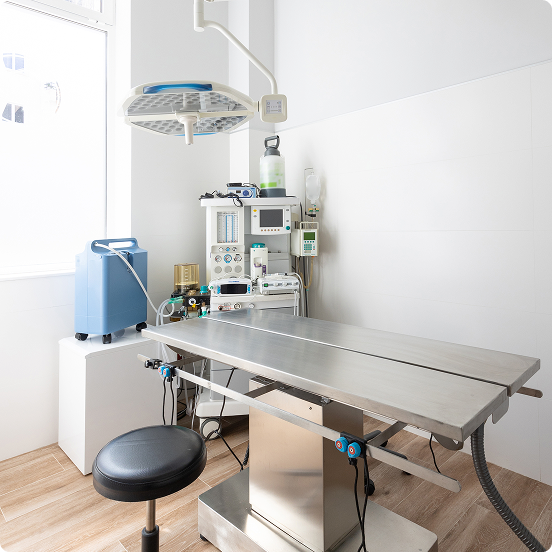
If your pet requires surgery, Dr. Strong will perform the procedure within Dixie Animal Hospital’s surgical suite, using our own specialized ophthalmic equipment. You won’t be starting over with someone new. The same team that saw your pet at their consultation will care for them through surgery, recovery, and every recheck after.
Your initial consultation
One fee. Comprehensive testing.
We believe you should know what to expect before you walk through the door.
Included in your first visit
- Complete ophthalmic exam with our board-certified ophthalmologist, Dr. Strong
- Diagnostic eye testing, including tear production, fluorescein staining, and eye pressure
- Advanced diagnostics such as ERG and ocular ultrasound, when indicated
- A personalized treatment plan for your pet, with time to answer all of your questions
- A detailed discharge summary to take home
- A full report sent to your primary care veterinarian
Additional services, as needed
- Lab submissions, such as bloodwork or cultures
- Take-home medications
- In appointment treatments
We’ll always discuss any additional costs with you before moving ahead.
What we offer
Our services and equipment.
Specialty eye care tailored to each patient, from ongoing medical management to advanced diagnostics and surgery.
Medical management
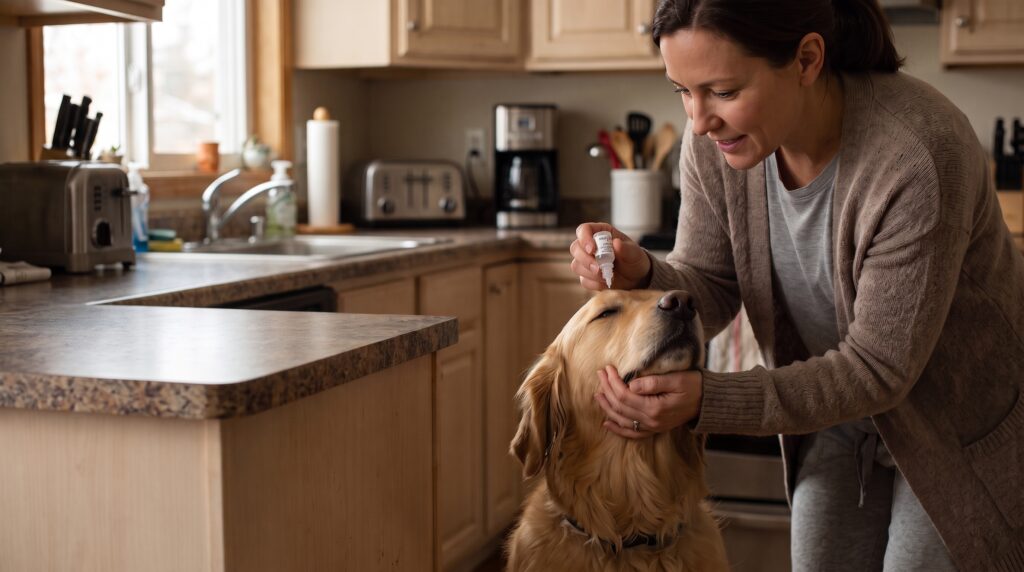
Many ocular diseases such as dry eye (KCS) or Feline herpesvirus (FHV-1) can be managed with medications and routine monitoring. We’ll build a treatment plan tailored to your pet, track their progress at rechecks, and adjust as needed to keep them comfortable and protect their vision long-term.
Ocular surgery
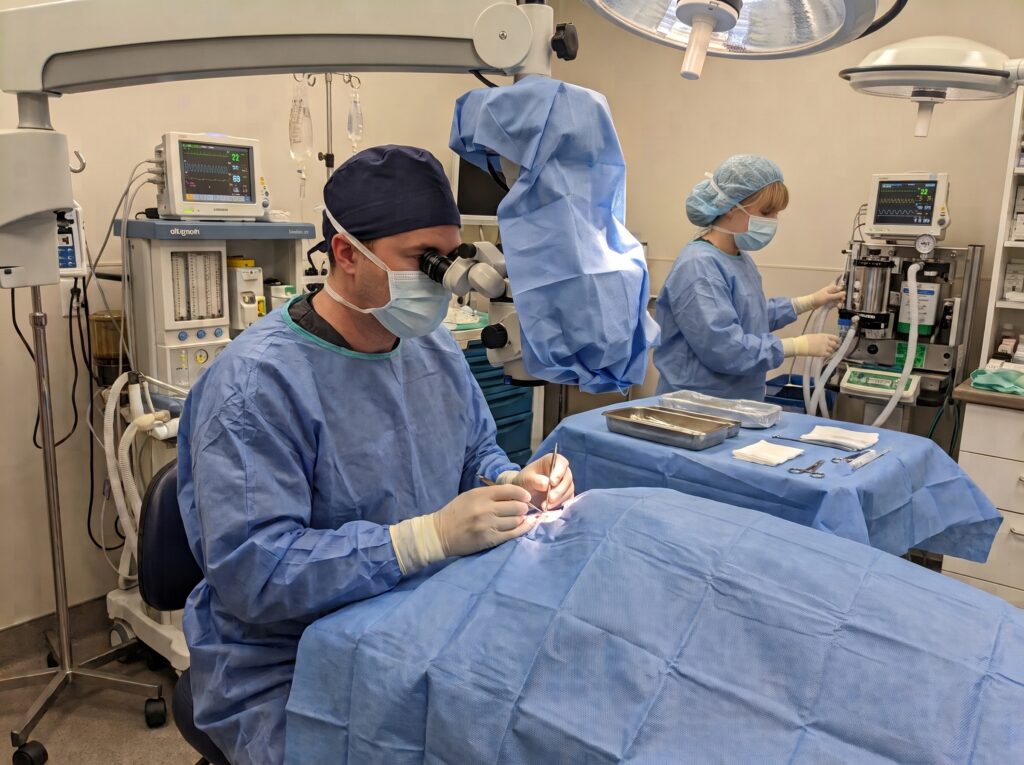
When surgery is recommended, Dr. Strong performs the procedure in the surgical suite at Dixie Animal Hospital, using our own microsurgical instruments and operating microscope when needed. Common procedures include cataract surgery with lens replacement, corneal surgery and eyelid mass removal, along with many others. We’ll explain the procedure, recovery and home care, and give you a clear estimate before anything is booked.
Specialized treatments
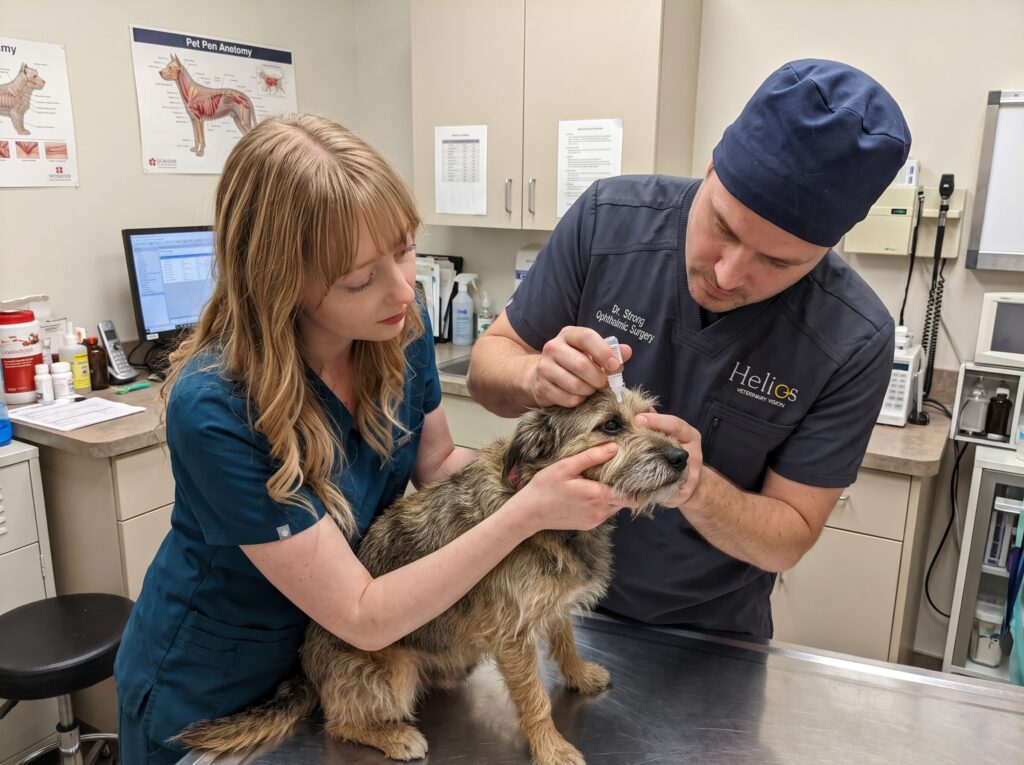
Some eye conditions benefit from treatments beyond medication alone. We offer corneal crosslinking, which uses riboflavin drops and light to strengthen the cornea while fighting infection, and UV-C therapy, a gentle light-based treatment that helps sterilize the eye’s surface. For pets with calcium deposits on the cornea, we also offer high-concentration EDTA treatment to help dissolve the build up. These options can support healing, reduce the need for surgery in some cases, and are discussed with you if they’re right for your pet.
Advanced diagnostics
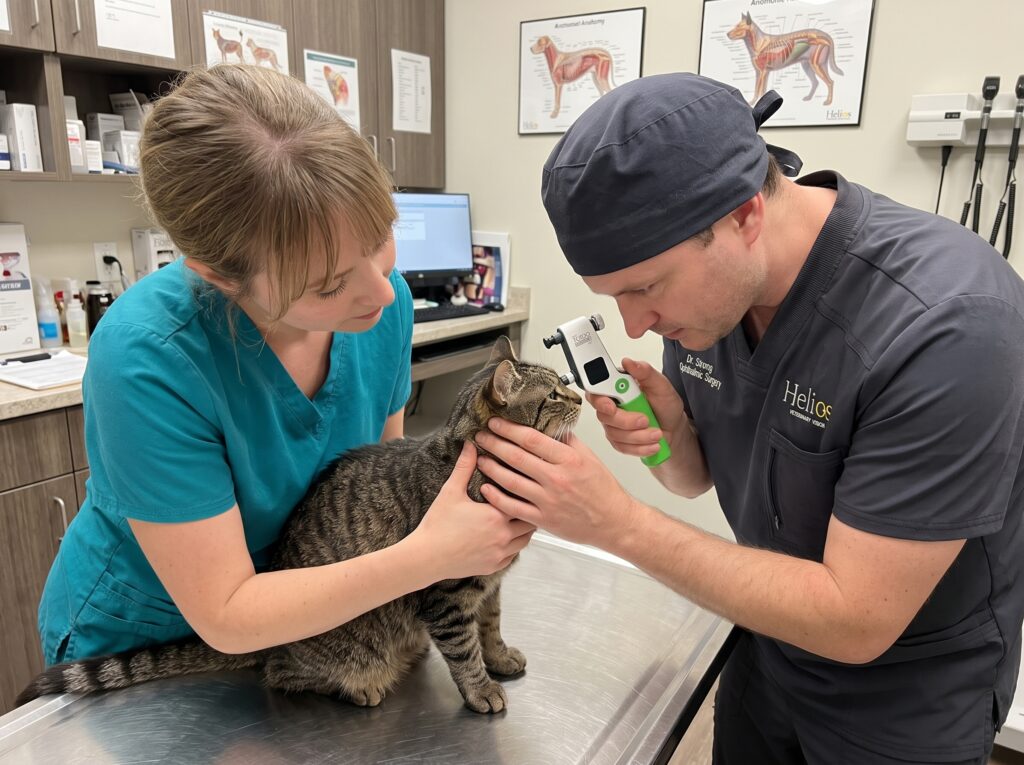
A specialist eye exam takes a close look at every structure of the eye. Depending on your pet’s condition, we may recommend additional tests such as gonioscopy, chromatic pupillometry, ocular ultrasound or electroretinography (ERG) to find the cause of a problem. These tests use highly specialized equipment and can often be performed on the same day, helping us build the right treatment plan for your pet.


Questions
Questions from pet owners.
Can’t find what you’re looking for? Get in touch and our team will be happy to help.
Can I book an appointment without a referral?
Since we are a specialty referral practice we do need your veterinarian to reach out first. This makes sure we have your pet’s full medical history and we can ensure your veterinarian says updated.
My vet hasn’t referred to Helios before. What should I do?
That’s not a problem, all your need to do is ask them to refer you to Helios Veterinary Vision. We have an online referral submission page to make the process simple for your veterinarian. If it’s urgent, they can call us directly to discuss the details of your pets care.
How soon can my pet be seen?
We work hard to keep referral wait times short and aim to see patients within one week. When your veterinarian submits your referral, they will be able to see our current wait times.
What if it’s an emergency?
If your pet is having an ocular emergency, please don’t wait for a referral. Contact your veterinarian or the nearest emergency clinic right away. Same day appointments may be possible in some cases, but will still require a referral from your veterinarian.
What eye conditions do you treat?
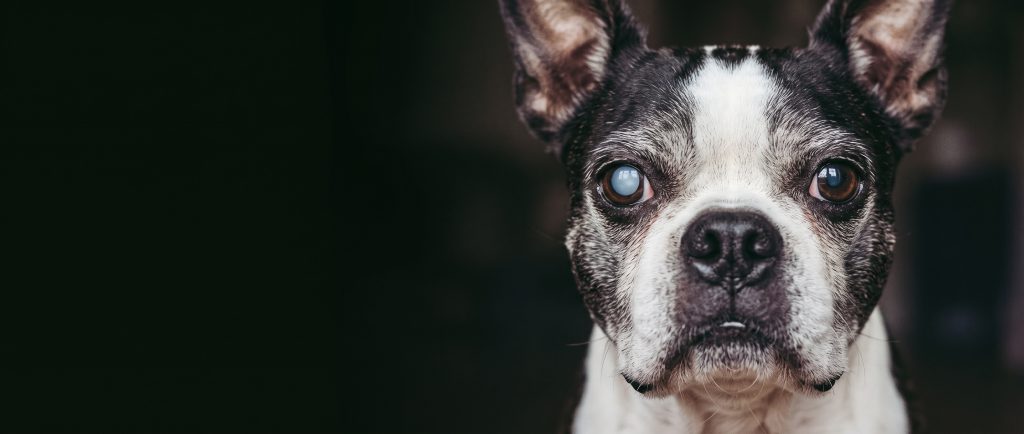
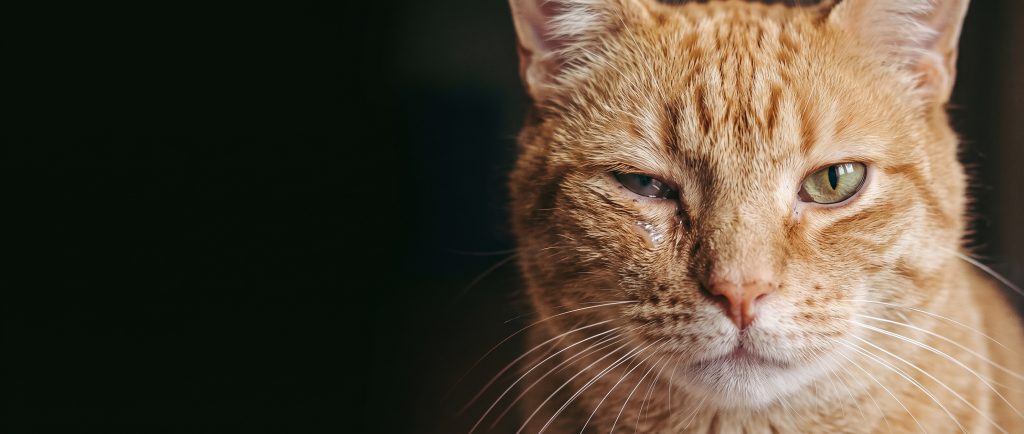
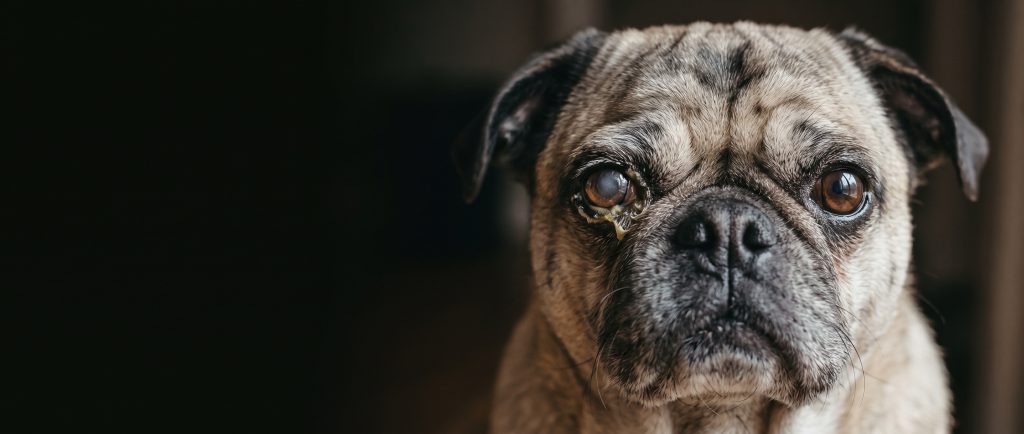
We diagnose and treat a wide range of eye conditions in dogs and cats, including cataracts, glaucoma, corneal ulcers, dry eye, eyelid problems, uveitis and conditions of the retina. If your veterinarian is unsure about an eye problem, we’re happy to get involved.
Do you see both dogs and cats?
Yes, dogs and cats make up a majority of the patients we treat and perform surgery on. We may be able to examine small mammals (i.e.. rabbits, guinea pigs) if you have a concern but please note we can’t perform surgery on them at this time.
How long does the first appointment take?
Please allow for at least 60 minutes or more for your first consultation. Eye conditions range from simple to complex and investigating may affect the length of appointment. We want time to answer your questions and explain your pets treatment plan.
What should I bring to the appointment?
Bring a list of your pet’s current medications (or the bottles), and keep giving any eye medications as usual unless your veterinarian has told you otherwise.
Will my pet need to be sedated for an eye exam?
Most eye exams don’t require sedation and can be done with gentle handling. If your pet has behavioural concerns or gets very stressed during appointments, we may require an oral sedative to be given ahead of time so we can make the most of your appointment. Sedation or anesthesia is only used for certain tests or procedures, and we’ll always discuss it with you first.
How much will treatment cost?
Every pet is different, so costs depend on the tests and treatment your pet needs. We’ll explain your options and give you a clear estimate before any further testing, treatment or surgery.
Will my family veterinarian be kept informed?
Yes, after every visit we send an appointment summary to your family veterinarian. Whether it’s one visit or many, they stay up to date on your pet’s ongoing care.